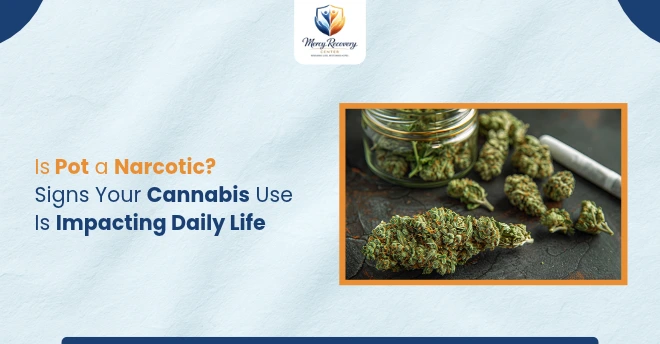
Medically, Pot (cannabis or marijuana) is not a narcotic. True narcotics are opiates formulated to treat pain or sleep.
Currently, though, the U.S. Drug Enforcement Administration (DEA) considers Pot a Schedule I controlled substance, leading to widespread confusion. Whether the drug is illegal or not, chronic use of cannabis may result in extreme dependency.
Mercy Recovery Center supports people to address substance use concerns, while keeping valuable parts of their day.
Understanding the Medical and Legal Definitions
Many people use the word narcotic to describe any illegal drug. This creates a lot of public confusion around cannabis.
Medical professionals and law enforcement view these substances in completely different ways.
Is Pot a Narcotic? The Medical Definition
In medicine, narcotics belong to a specific class of drugs called opioids.
Doctors prescribe these medications to manage severe physical pain.
Examples include:
- Heroin
- Fentanyl
- Prescription painkillers such as oxycodone
These drugs bind to brain receptors to relieve pain and cause sedation.
- Pot does not operate on these pathways
- It comes from the cannabis plant
- Its main active chemical is THC
- THC works on different brain spots called cannabinoid receptors
So, in a medical chart, pot is not a narcotic. It is a cannabinoid.
Is Pot a Narcotic Under the Law?
The legal confusion started decades ago. The DEA categorizes drugs into five schedules based on their legal use and potential for abuse.
Cannabis is currently classified as a Schedule I controlled substance, along with heroin and LSD.
According to the government, Schedule I drugs have:
- A high potential for abuse
- No accepted medical use at the federal level
Due to this federal classification, you may hear someone refer to pot as a narcotic.
Important legal note
- Some states allow medical or adult-use cannabis
- Federal Law is different from State Law
- Laws can change
- Your daily habits are a better warning sign than a legal label
Why Pot Can Still Be Habit-Forming
Pot (cannabis or marijuana) is not an opioid, but it can still train the brain to want more. THC causes a good feeling. The brain notices that feeling and starts to want it again.
As time passes, more pot may be required to experience the same feeling. This is termed tolerance.
About 3 in 10 people who use cannabis develop cannabis use disorder.
Warning Signs of Cannabis Use Disorder
Cannabis use disorder is a recognized medical condition. CDC outline specific criteria to diagnose it.
If you notice these behavioral shifts, you may be struggling with dependency:
- Loss of Control: You use more marijuana/cannabis than you originally intended, or you use it more frequently.
- Failed Attempts to Quit: You want to stop using the drug but find yourself returning to it to avoid withdrawal symptoms.
- Loss of Interest: You stop participating in hobbies, sports, or family events that you previously enjoyed.
- Neglected Responsibilities: You miss days at work, fail school assignments, or ignore basic household chores.
- Increased Tolerance: You need to consume much higher amounts of THC to feel the same affects you used to get from a small dose.
- Relationship Problems: You argue with your loved ones about your drug use or hide your habits from them.
- Withdrawal Symptoms: You experience insomnia, irritability, or intense cravings when you cannot access the drug.
- Money and Safety: You spend too much on pot. You drive while high or put yourself in risky situations.
If you recognize these multiple signs. It may be time to evaluate your daily routines and seek professional guidance.
Casual vs. Challenging Cannabis Use
| Daily Habit | Casual Cannabis Use | Challenging Cannabis Use |
| Frequency | Occasional use during specific social events | Daily use to cope with normal stress |
| Finances | Spending small amounts within a strict budget | Spending rent or grocery money on the drug |
| Obligations | Work and school performance remain completely stable | Frequently missing work or failing classes |
| Social Life | Enjoying time with both sober and using friends | Isolating yourself to consume the drug alone |
| Mood | Feeling emotionally stable without the substance | Feeling angry, anxious, or sick when sober |
Seeking Help at Mercy Recovery Center
You are not alone in the struggle to deal with a substance use disorder. Mercy Recovery Center offers caring, physician-supervised treatment for people addicted to marijuana or cannabis. We know you are busy, have family responsibilities and have to work.
We specialize in outpatient addiction services and help you to heal in the comfort of your home. We offer comprehensive services tailored to your exact needs.
- Medication-Assisted Treatment (MAT): We utilize FDA-approved medications to help reduce your physical cravings and manage difficult withdrawal symptoms.
- Individual Addiction Counseling: You will work one-on-one with trained professionals to build healthy coping strategies and prevent future relapse.
- Telehealth Services: We offer secure virtual appointments for patients across New Jersey, New York, and Pennsylvania. You can receive expert care from the absolute privacy of your living room.
FAQs
Does marijuana cause addiction?
Yes. Your brain gets accustomed to regular use. When you withdraw from the drug, your body experiences physical reactions, such as nausea, headache, and extreme insomnia.
Can I get treatment without going to rehab for a month?
Absolutely. Outpatient programs enable you to attend medical appointments and therapy sessions throughout the week while you return home during the evening.
Does needing more Pot mean I am addicted?
Not always. Tolerance is not necessarily addiction. Addiction is also characterized by loss of control, cravings and further use despite damage, and these are interconnected. With your full pattern, a doctor or counselor may give you a definitive answer.
Take the First Step toward Recovery
Pot may not be a narcotic in the medical sense, but it can still take over your days. When cannabis/marijuana continues to cause negative effects on your career, relationships and mental well-being, our experienced team will help you reach a state of long-term stability.
Contact us to get a free, private meeting now.